The narrow band between
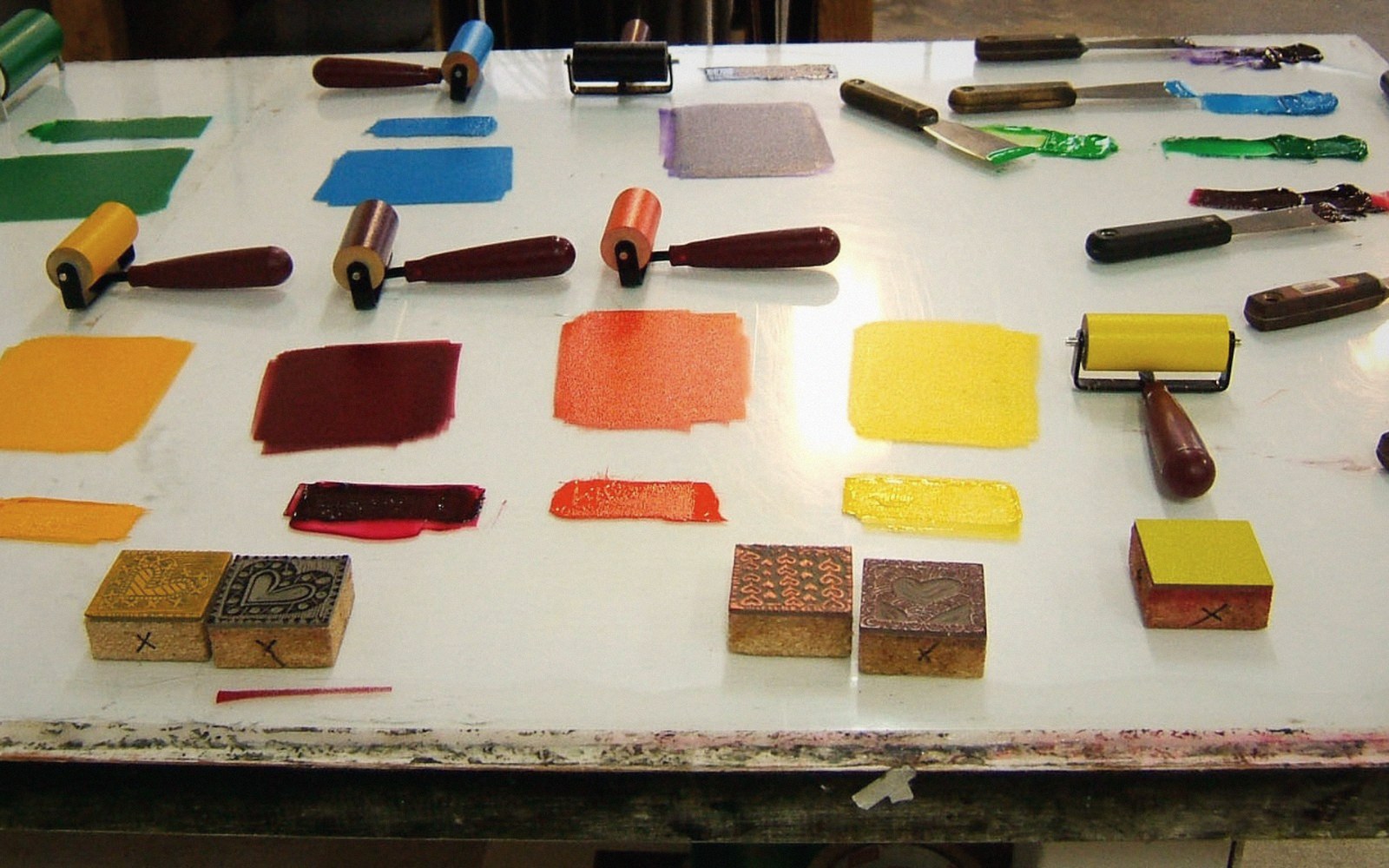
The roller loads from the ink plate, and that transaction has to be right before the forme is touched. Too much ink and it flows into the counters — the enclosed spaces inside letters like e, o and p — filling them and printing as solid blobs. Too little and the roller skips, leaving gaps across the face of the type that no amount of pressure on the pull will recover.
Neither failure is always obvious beforehand, though the roller and plate give some warning. Both show plainly only in the pulled sheet.
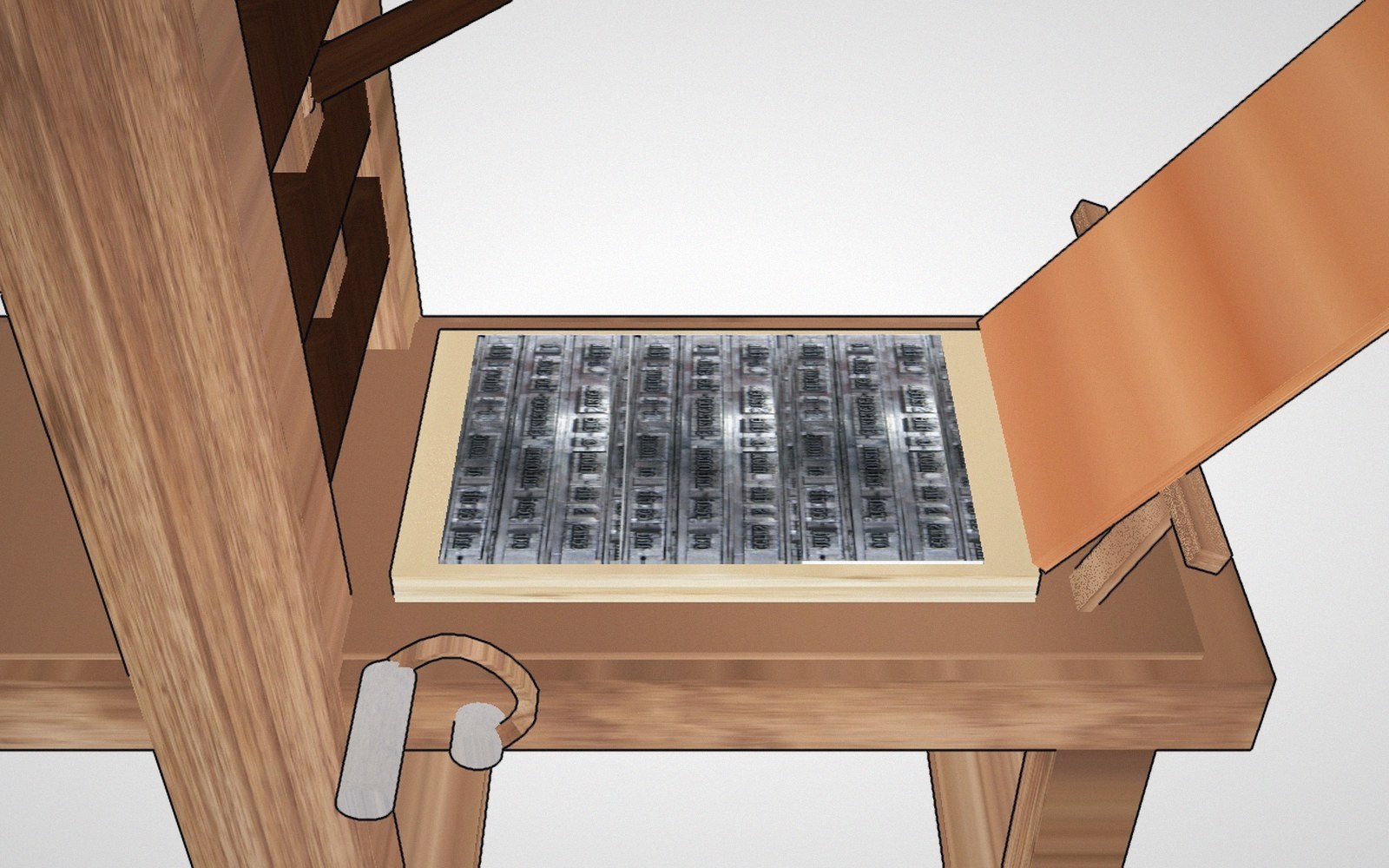
The judgement is made by eye and by ear. A well-inked roller has a slight tack to it — a soft resistance as it lifts from the ink plate. The film should be thin enough to show the plate surface dimly through it, not so thin that the plate appears clearly. When the roller passes over the type, it makes a brief, light whisper of contact. Too much ink, and it drags. Too little, and the sound disappears.
Rollers in school use were typically composition rollers — a mixture of glue and molasses cast around a metal core — and they were sensitive to temperature. A cold room stiffened them, making the ink film uneven. A warm room softened them to the point where they shed ink too readily. Neither problem was soluble mid-run; it was managed by inking more carefully, and by learning to read the plate before the forme took the roller at all.
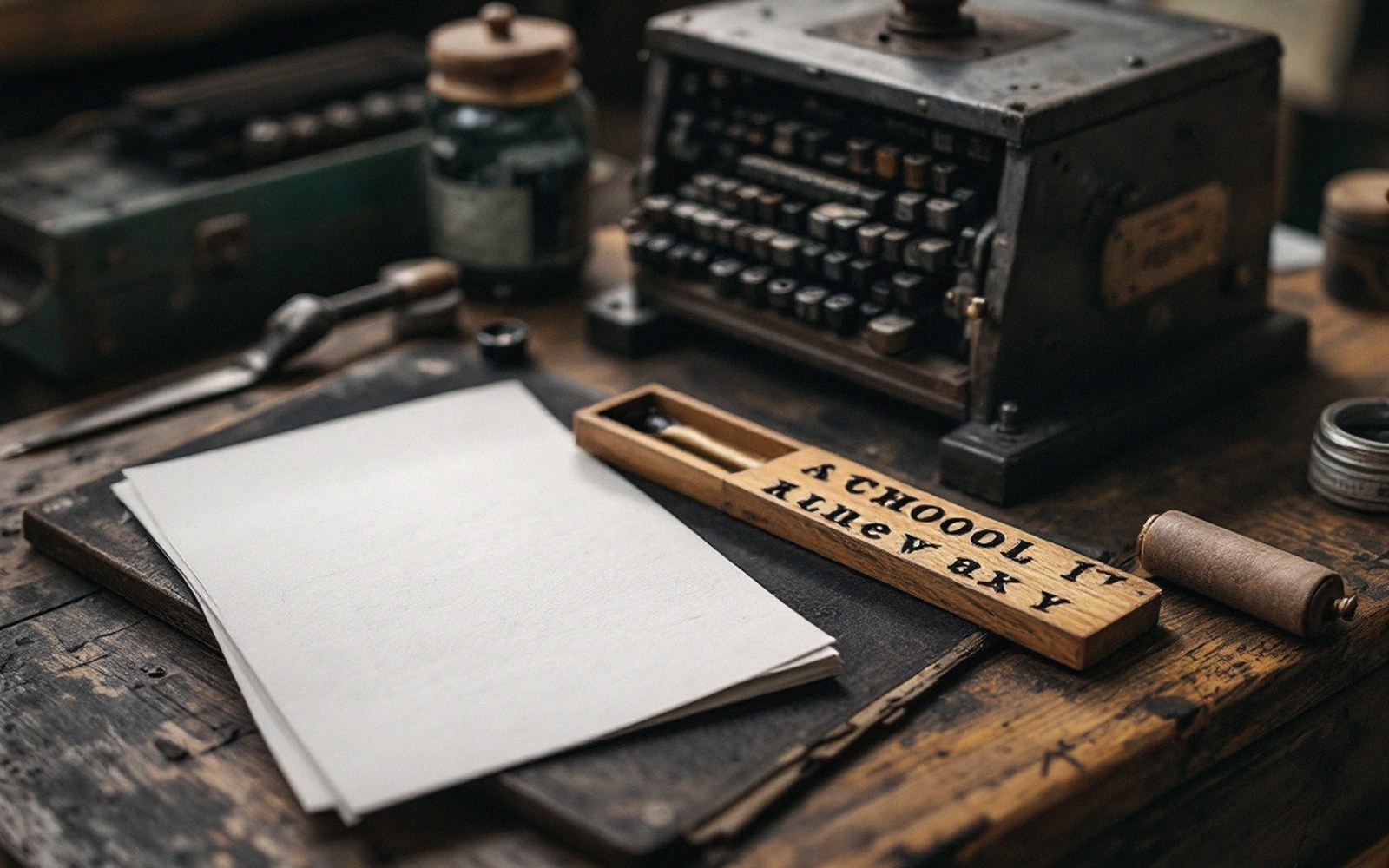
Heavy ink fills the counters of e and o first, which is why a pale proof is the safer error.
Distribution across the ink plate matters. Ink is worked outward from the centre with the roller in several directions before the form is ever approached, building an even film across the full width the roller will travel. Rush that stage, and the inking is uneven from the first pull.
The correction, when the sheet shows a problem, is a smaller intervention than it seems: a little more ink, or a clean rag drawn once across the plate to thin it. The register of what went wrong lives in the sheet, and reading it is a skill that comes only from watching the forme accept the ink and seeing what prints.