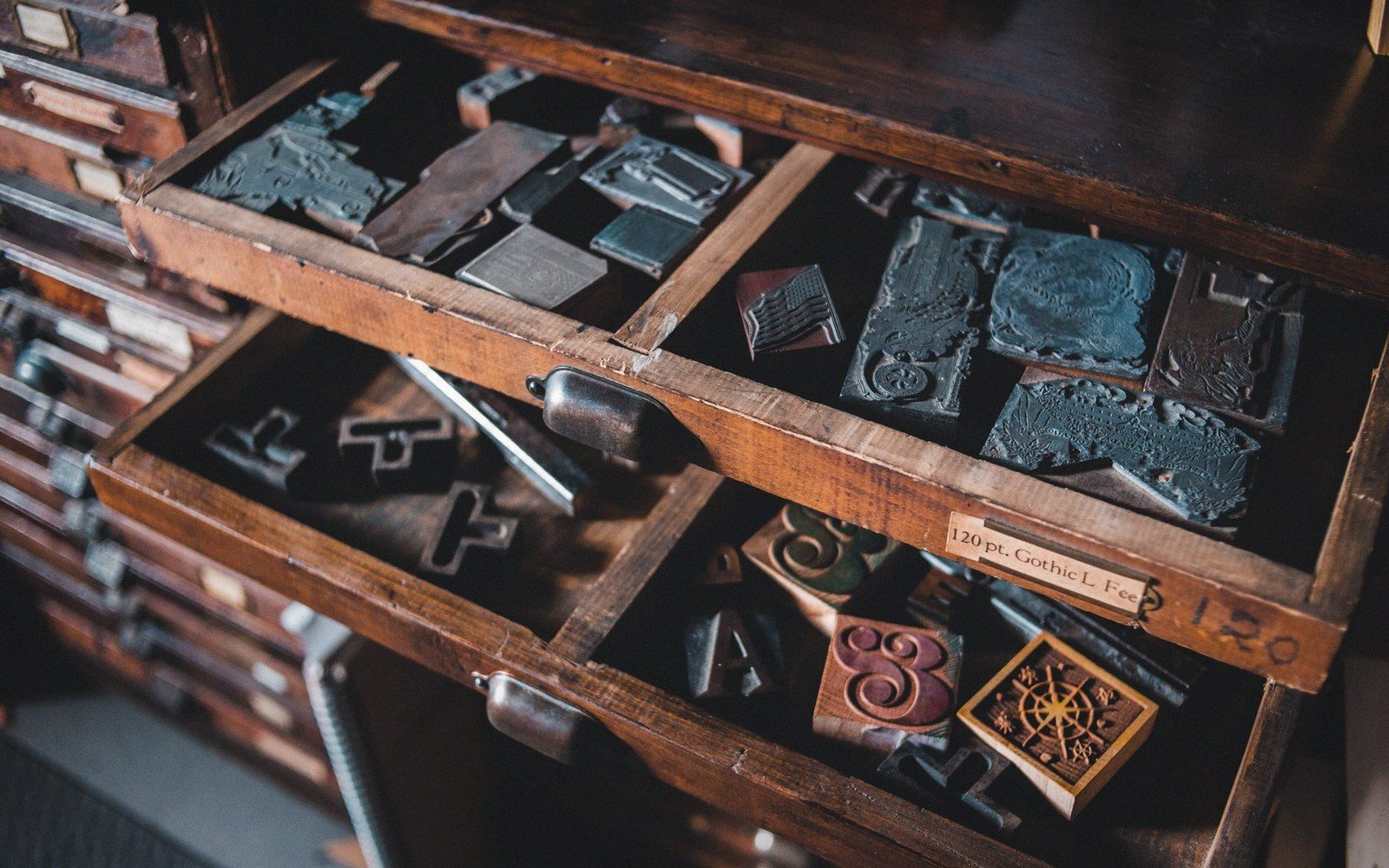
Why no two impressions are exactly alike
The press is set, the forme locked, the ink distributed. The first sheet goes down, the bar swings, the platen descends — and what comes up is never quite what the second sheet will be.
Pressure is the variable nobody talks about until a run goes wrong. On a small flatbed, the platen meets the type across the whole forme at once, and the force required depends on how much type is in the chase. A solid paragraph of ten-point text asks more of the press than three lines of a headline. Too little pressure and the lighter strokes drop out; too much and the serifs spread, the counters fill, and the whole thing looks like it was pulled through mud.
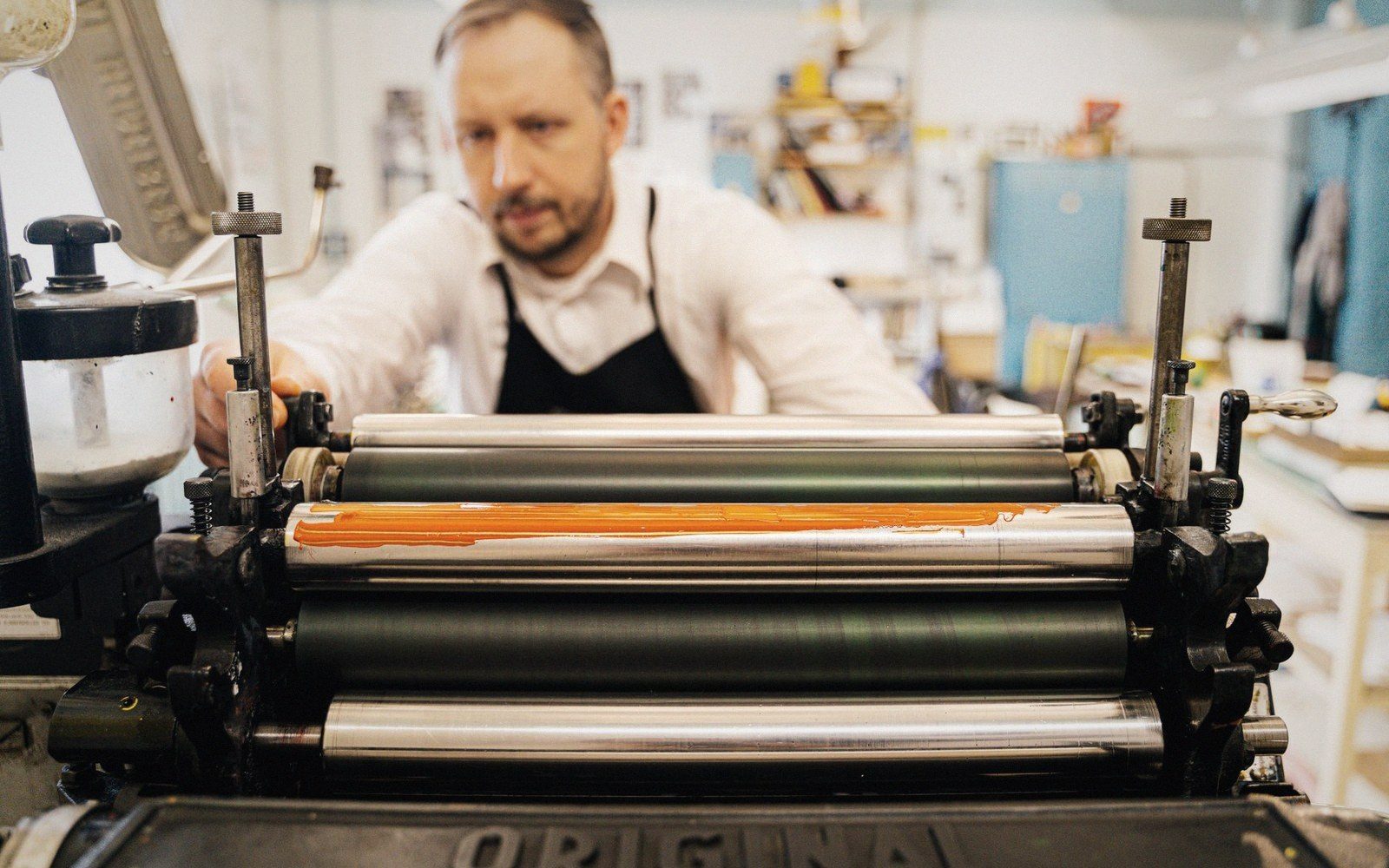
Ink is worked out on the slab until the roller stops sounding wet; that noise is the only gauge on the machine.
Photo: AI25.Studio Studio / PexelsPacking — the layers of paper and card placed between the platen and the tympan — is how you tune that pressure before the run begins. Add a sheet and the platen reaches the type sooner, pressing harder; remove one and it eases back. Getting this right is not guesswork, but it is also not arithmetic. It is the kind of knowledge that lives in the hands, built through waste sheets and attention.
Dwell is the time the platen holds the forme under pressure. Too brief and ink does not transfer fully from type to paper, especially on a rougher stock. The bar needs to reach its natural stopping point and pause there — not be dragged back the moment it arrives. Schoolroom printers were taught to feel this: the bar bottoms out, the impression is taken, then the return. Rush it, and the whole forme prints lighter.
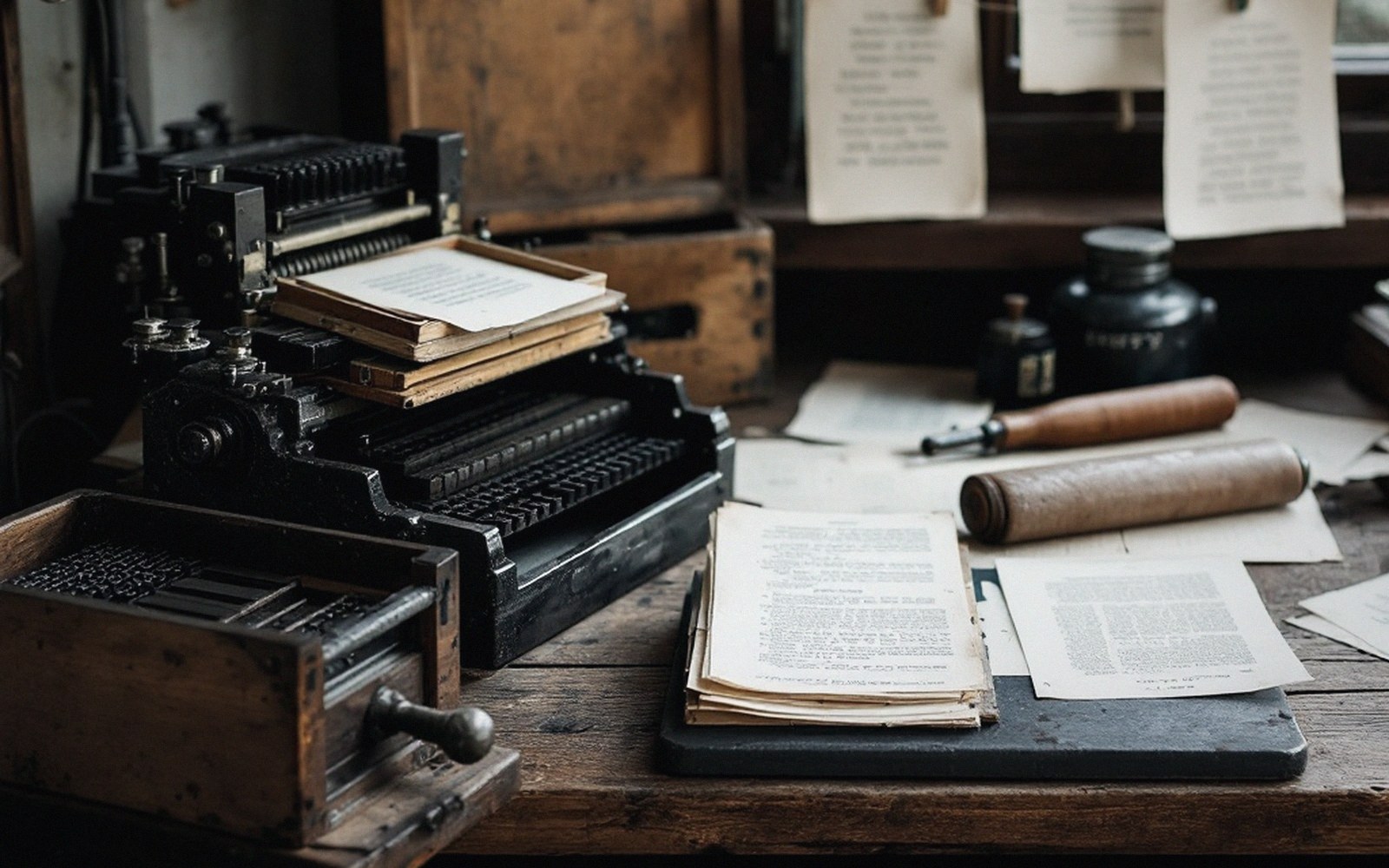
And then: the sheet itself. Paper that has absorbed ambient moisture pulls differently from paper stored dry. A slight variation in thickness between sheets — common in school supplies — changes the effective packing mid-run. Even the speed of the pull varies between operators, or between a tired arm and a fresh one.
None of this makes the press unreliable. It makes it responsive. A run of forty identical sheets is not a mechanical given; it is the result of consistent technique, adjusted packing, and enough attention to catch the third sheet before it dries on a slightly slipping roller.