Reply by post, correction in print
A school that sent its newspaper into the correspondence network rarely sent into silence. The reply came back — sometimes within a week, sometimes after a month — in an envelope of identical dimension, carrying another school's name in the masthead and, somewhere in the body of it, a response.
This is what distinguished printed exchange from ordinary correspondence. A letter answers privately; a printed reply answers in public, before the whole class that set it. When a school in one region published a piece on a local trade or seasonal custom, the school that received it might print a correction — not out of hostility, but because the facts looked different from where they stood. That correction appeared in their next issue and travelled back. The original class read themselves being answered, in type, by children they had never met.
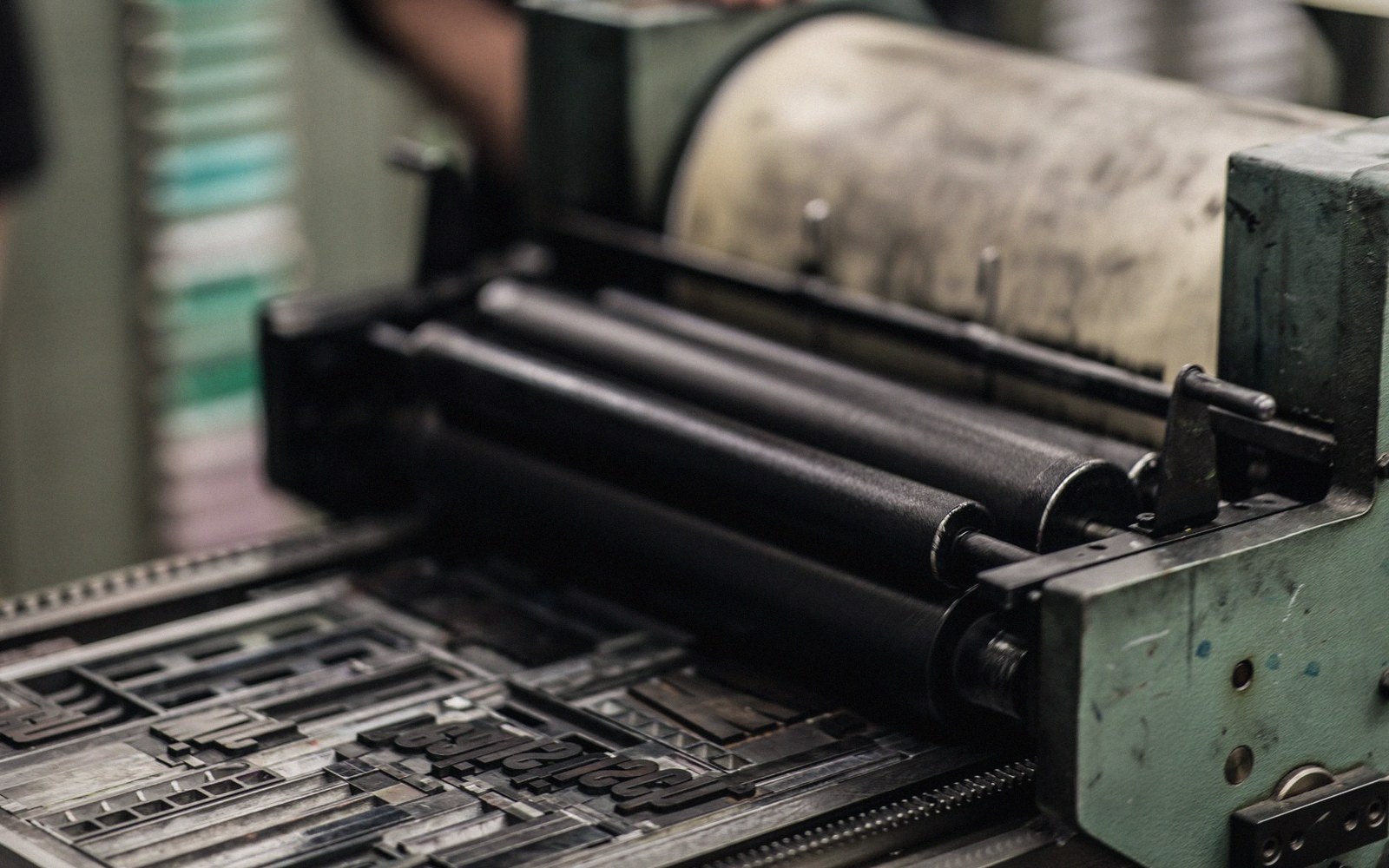
The measure is set before the first letter goes in and cannot be changed once the line is filling.
Photo: Wendelin Jacober / PexelsThe effect on writing was immediate. Knowing that a reader two hundred miles away shared no local context made the prose more careful; knowing that the same reader might write back for strangers made it more honest. Vagueness got found out. Errors of fact — about a river's name, a crop, a local process — came back annotated in the margins by a teacher's hand, or contradicted plainly in print in the return issue.
Arguments happened too, conducted entirely across the post and in the measured restraint that setting type imposes. A line that would take three seconds to say aloud took ten minutes to compose in metal. That friction was not incidental; it kept exchanges from escalating. Disagreement was substantive rather than sharp.
Some exchanges ran for several issues in sequence: claim, correction, clarification, acknowledgement. These were the most educationally productive of all the traffic in the network, because they made revision visible. A piece was not finished when it left the classroom; it continued in the correspondence, publicly and in print.
What came back, then, was not just a newspaper. It was evidence that the original text had been read, weighed and found worth answering — which is, in its way, the highest form of editorial response a printer can receive.