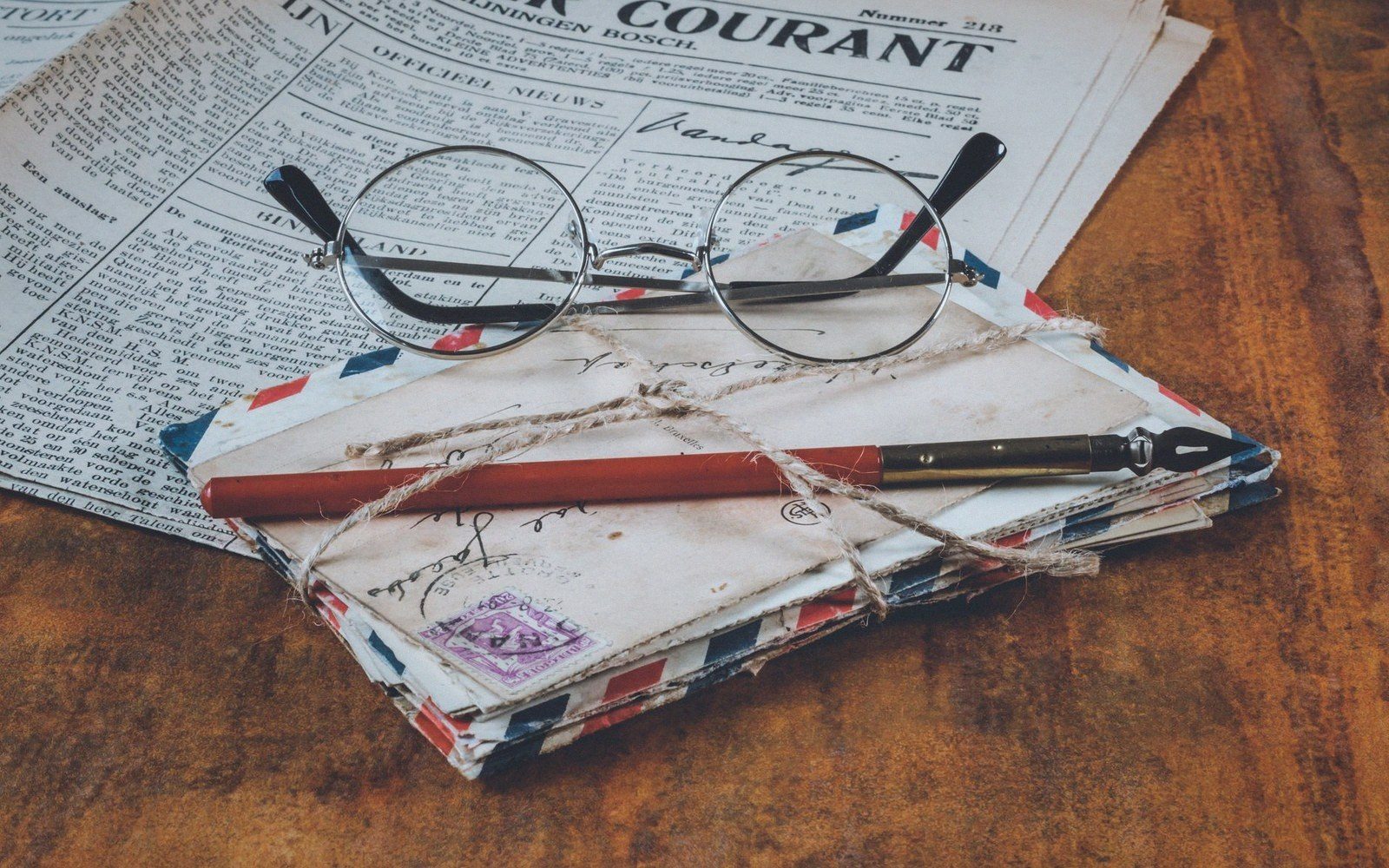
The object that arrives is not a letter
A letter tells you what someone wants you to know. A publication tells you what a community decided was worth printing — and those are not the same thing.
When two schools entered into a correspondence by exchanging their printed papers, the envelope that changed hands carried something with a different weight to any handwritten note. It carried editorial judgment. Someone had argued for that text at a composing session, the class had voted it in or out, the forme had been locked, the ink had been rolled, and the run had been pulled and counted. By the time the paper traveled by post to a classroom two hundred miles away, it had already survived a process of collective selection that a letter never undergoes. Receiving it meant receiving the result of all of that.
This is the essential fact about the exchange networks that grew between schools practicing classroom printing through the middle decades of the twentieth century. The unit of correspondence was not the message; it was the edition. And an edition, however modest its presswork, is a publication — a thing made public — in a way that a letter addressed to a single recipient is not.
What the envelope actually contained
The practical mechanics were simple enough. A school would complete a print run, fold and count the copies, and set aside a portion for distribution outside the room. Some copies went to parents, some to the local mairie or library, and a number — sometimes as few as six or eight, sometimes a few dozen — were addressed to correspondent schools and slipped into envelopes or wrapped in paper bands for posting.
What arrived at the receiving school was a real object: a numbered edition with a masthead that had been cut once and used again and again, ink that had been chosen and applied by roller, type that had been set by hand from a case whose compartments the children of another school had learned just as their own. The paper might be cheap, the impression might be uneven — ink flooding the counters in one line, skipping in another — but none of that was the point. The point was that this was genuinely theirs: written, edited, composed, printed and posted by the school that sent it.

The platen is the whole specification: a forme no larger than it will close on, and a sheet no larger than the forme.
Photo: Gr.Diana letterpress machine · Wikimedia CommonsThe receiving class would read it aloud, or pass it around, or pin it to a board. They were not reading a report about another school; they were reading that school's own account of itself, shaped by every constraint that classroom printing imposes. What was left out told you as much as what was in.
A different kind of attention
Reading someone else's paper sharpens your own practice in ways that no teacher prompt quite achieves. If a correspondent school's text was clean and plainly argued, it made the case for editing before setting more viscerally than any instruction could. If their impression was crisp, it raised a question about inking and pressure that the children had to answer for themselves on their own press. The paper functioned as evidence of what was possible and as a gentle rebuke of what was merely habitual.
The correspondence also changed the nature of writing within the classroom. A text composed for a local reader — a parent, a neighbor — operates in a shared context where much can be assumed. A text that will travel to a school whose geography, season and daily life are genuinely different has to carry its own context. The prose has to introduce what the writer would normally leave unspoken. This is one of the more demanding lessons that classroom printing ever produced, and it arrived not through instruction but through the existence of a reader two hundred miles away who shared nothing except the habit of printing.
Two editions in an envelope: one going out, one coming in. Over a year of exchange, a school accumulated something between an archive and a correspondence — a record of two communities deciding, month by month, what was worth the labor of setting in metal and printing in ink. That record, where it survives, is evidence of a pedagogy that trusted children to publish rather than merely submit, and trusted the mail to carry the result.