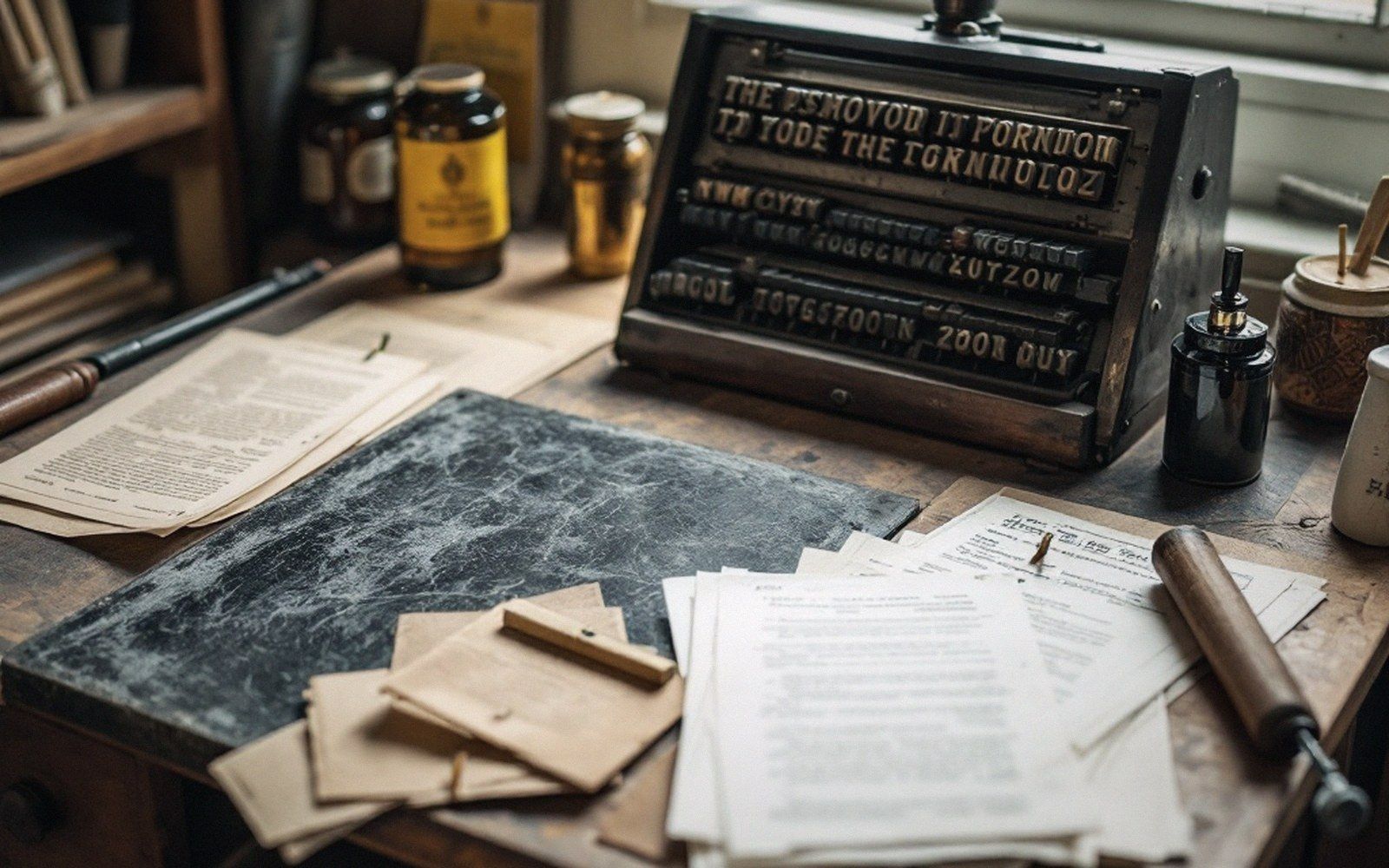
A publication, not an exercise
There is a moment when the class newspaper stops being practice and becomes a thing that exists in the world. It is the moment someone outside the room reads it.
The number matters. Twenty copies, thirty, fifty — whatever the press and the paper budget will bear — but a specific number, recorded, distributed, gone. Not a draft handed back with corrections. Not a worksheet filed in a folder. A numbered edition, inked and pulled, sent to other schools, left in the village hall, posted in an envelope two hundred miles away. Once it leaves the room, it cannot be recalled.
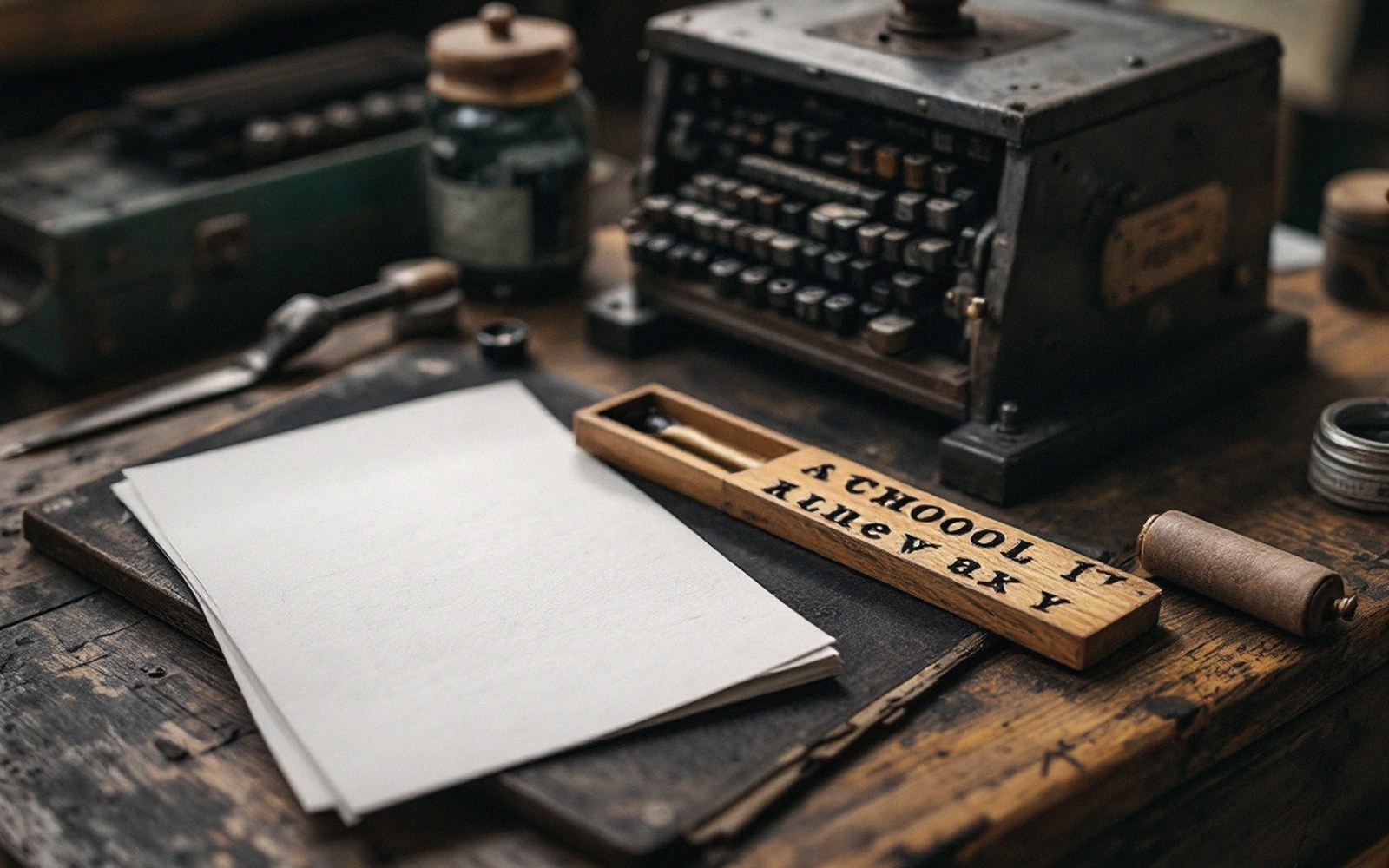
Heavy ink fills the counters of e and o first, which is why a pale proof is the safer error.
That irreversibility changes everything upstream of it. A child writing a piece that will be read only by a teacher writes for one reader who already knows the context, will forgive the gaps, and grades charitably. A child writing for a print run writes for strangers — and strangers are not charitable. They skip. They misread. They put the paper down. The prose has to carry them without help.
What a numbered edition demands
The discipline begins before a single sort is set. Editing before setting is the rule precisely because correction is cheap on paper and expensive in metal: a line distributed back into the case costs the same labour as a line originally composed, and it shows in the schedule. So the text is argued over before it goes near the composing stick — cut, clarified, made accurate. The number at the top of the edition means the class has committed.
Setting and printing follow their own demands. The measure is fixed, the stick is loaded three lines at a time, and the forme locked before the press sees it. When the roller runs and the platen meets the type, that impression is the text. Any error that survived the editing stage is now multiplied by the edition count and sent out under the school's name. This is not a deficiency of the method; it is its point. The accountability is real because the consequences are real.
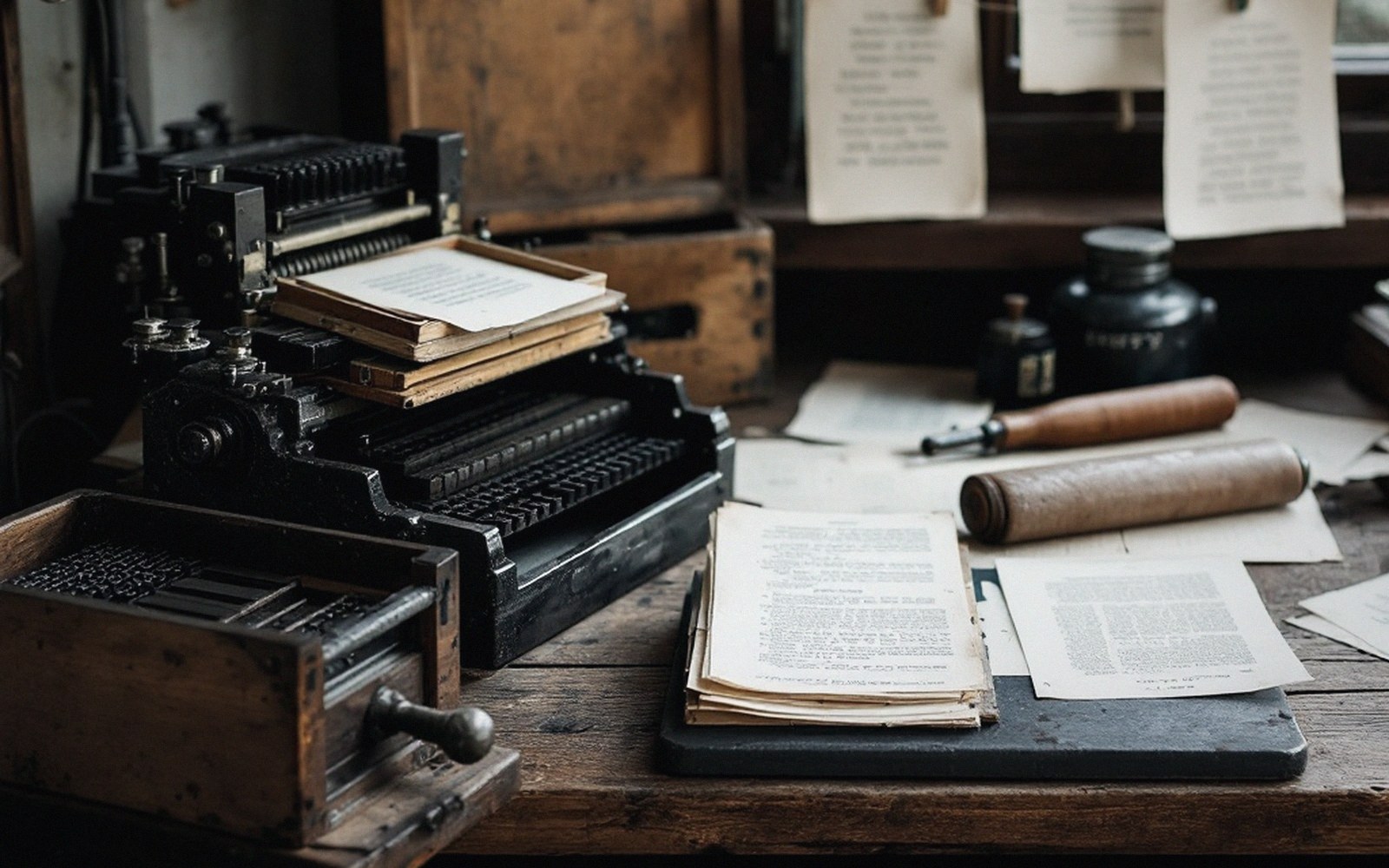
Distribution is where the numbered edition separates itself most sharply from the classroom exercise. Copies go: some to exchange partners in the correspondence network, some to parents, some kept as the record copy. The number printed is the number that exist. There is no digital file, no corrected version two. What survives is what was pulled from that forme on that day. Schools that kept a register noted the edition number, the run length, the date, and where copies went. Those registers, where they survive, are now the primary evidence for tracing which newspapers reached which classrooms and when.
The correspondence network depended on this specificity. Two editions arriving in an envelope from a partner school were not interchangeable; they were distinct publications, numbered and datable, carrying the voice of a particular class at a particular moment. When the receiving school replied — sometimes in print, sometimes in a letter, occasionally with a correction published in their own next edition — they were responding to a document, not a gesture. The exchange had the character of a real press relationship, with all the accountability that implies.
None of this requires a large press or a sophisticated operation. The small cast-iron flatbeds used in classrooms from the early twentieth century onward were scaled to exactly this kind of work: short runs, manageable type sizes, one or two colours at most. The limitation in run length was often not the press but the drying space — sheets pegged across a line, the wall space fixing the practical ceiling on any single session's output. Within those limits, the edition was real: numbered, printed, sent, read, sometimes argued with. The exercise was over the moment the ink dried.