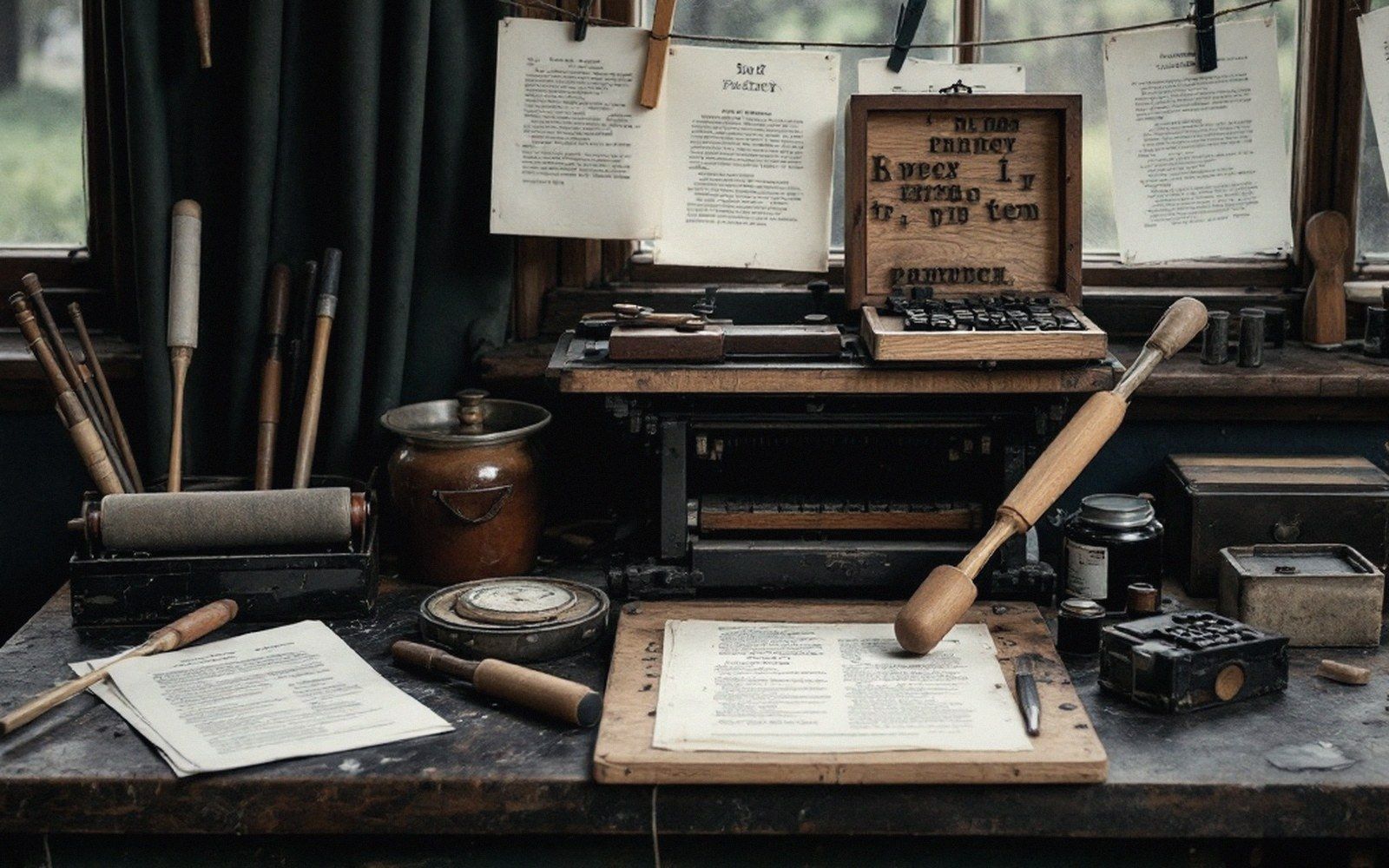
The composition starts before the composing stick
The term used in Célestin Freinet's pedagogy was texte libre — free text — meaning a piece written by a child on a subject of their own choosing, without a prompt. That autonomy is only the beginning of the process. What follows is collective and, by any reasonable measure, editorial.
Once a piece was offered, the class read it aloud. They discussed whether it was clear, whether the ending worked, whether a word was right. The writer defended or conceded. The group voted on whether to print it. This was not a pastoral exercise in sharing feelings; it was a publication decision, made by the people who would have to set the type and who understood, at least practically, that space in a print run is finite.
The constraint of the press sharpens everything. When editing before setting is the rule — correcting on paper rather than in metal — the discussion around a free text becomes genuinely consequential. Words crossed out in the draft cost nothing. The same correction made after the type is set costs time, broken spacing, and occasionally a damaged sort. A class that has learned this by experience reads a draft with different eyes than one that has not.
What the free text system produced, at its best, was writing shaped by a real audience under real conditions. The child writing for the class knew the class would judge it — not with a grade but with a vote. The class judging knew the piece might travel in an exchange envelope to a school they had never visited, where readers would have no patience for an unclear sentence and no way to ask what the writer meant.

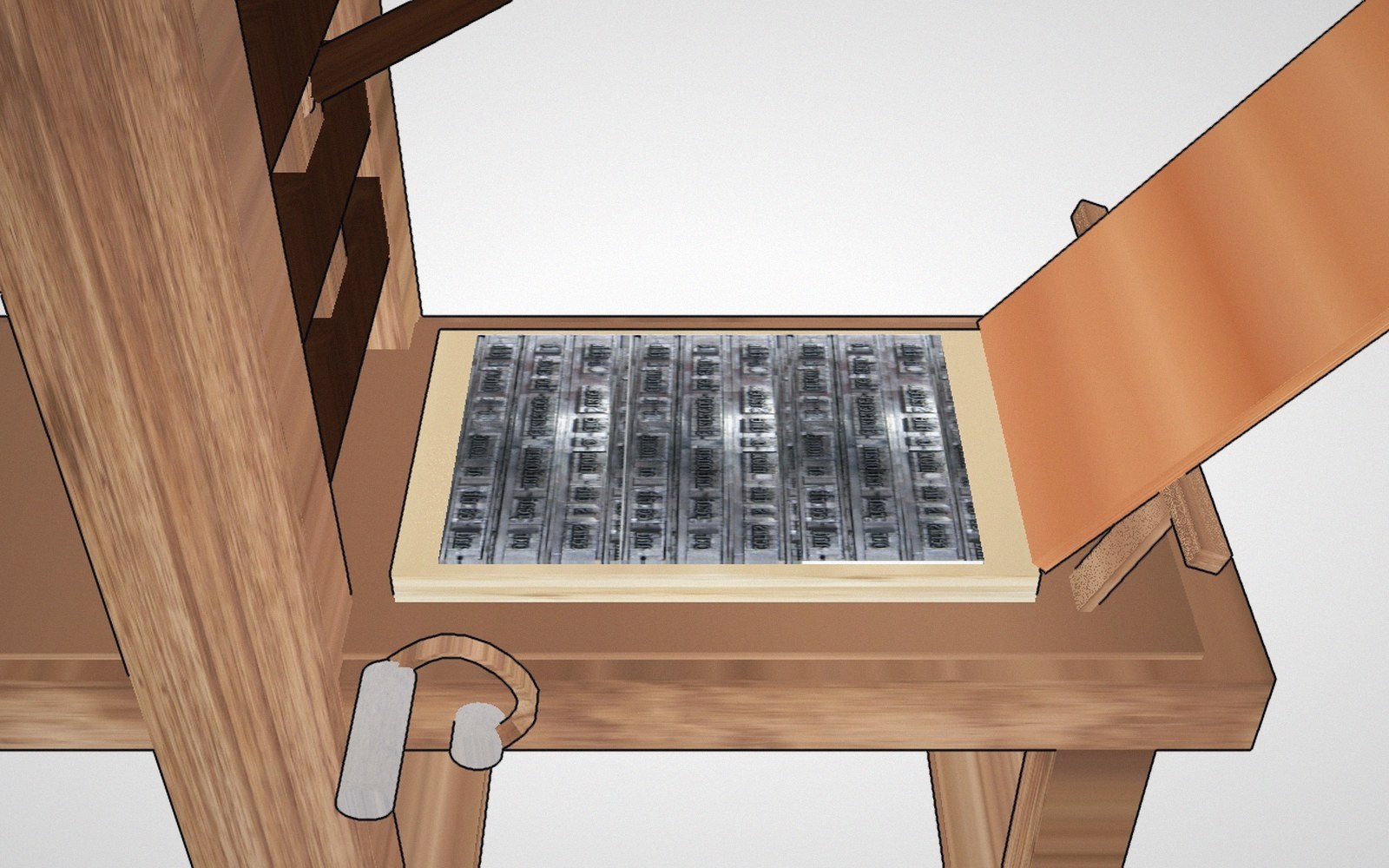
The platen is the whole specification: a forme no larger than it will close on, and a sheet no larger than the forme.
Photo: Gr.Diana letterpress machine · Wikimedia CommonsThe subject matter varied: a weather observation, a family event, a piece of local news, something overheard. What mattered was that the choice belonged to the writer. The editorial process that followed was not a correction of that choice but a preparation of it for print — which is, in essence, what editing has always been.
The voted text was then assigned to a compositor. From that point on, the words were no longer the writer's alone. They were the paper's.