
A loose page carries its own evidence. You just have to know where to look.
Reading What the Press Left Behind
No date on the sheet doesn't mean no date in the sheet. A printed page from a school press carries at least three independent lines of evidence — type wear, paper stock, and the masthead cut — and when they converge, the margin of uncertainty narrows considerably.
Type wear is the most legible. Cast type used by children on a small flatbed accumulates damage in a predictable sequence: first the sharp serifs on capitals go slightly soft, then the fine strokes on lowercase letters begin to show a faint shadow at the shoulder, then broken letters appear — a lowercase e missing its crossbar, a p with a dented bowl. If a school's archive holds several dated editions, you can sequence the damaged letters and treat the wear pattern as a rough clock. A sheet with clean type sits early in the run; one with multiple broken sorts sits late. The case's wear pattern is its memory.
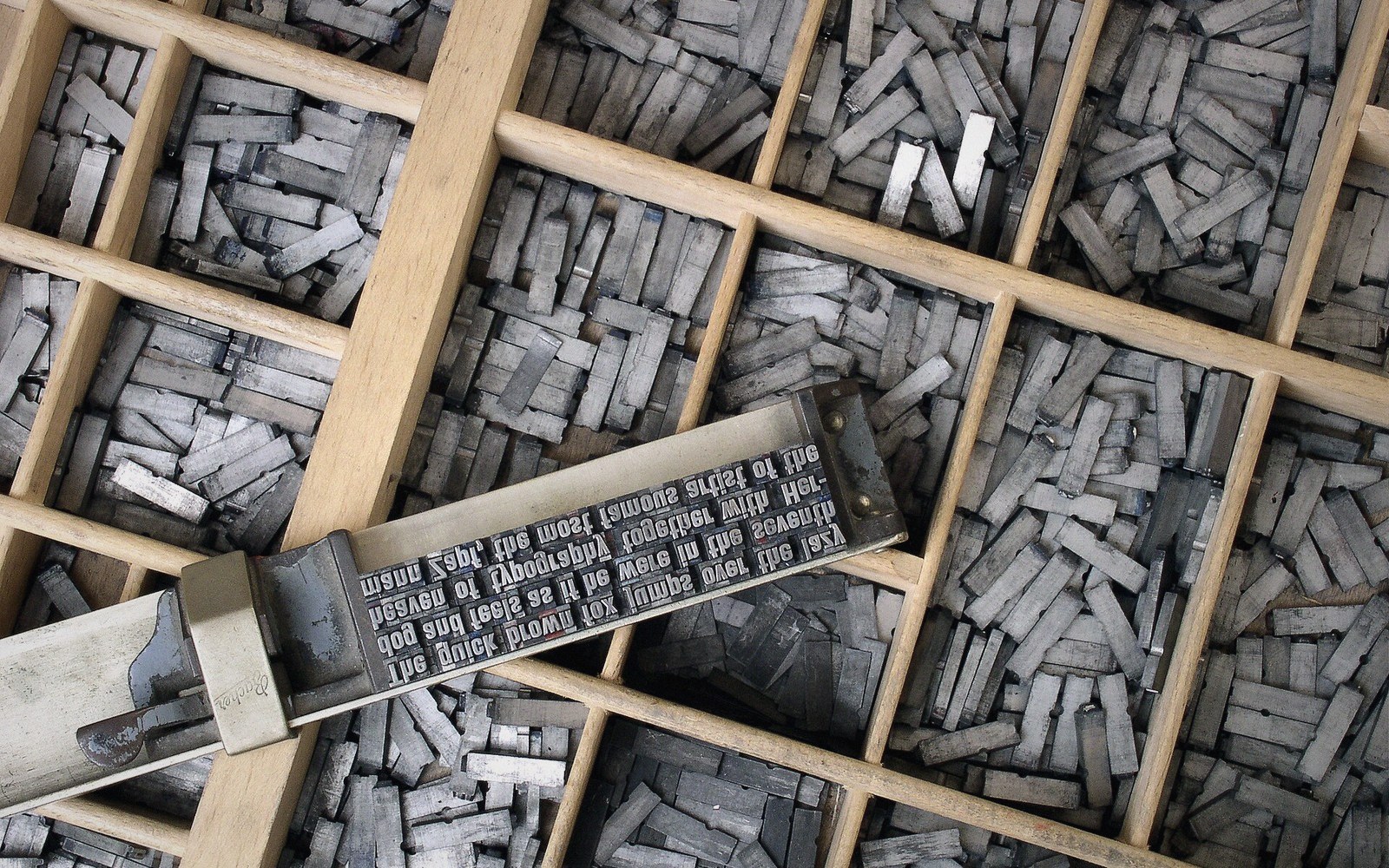
Compartment size follows letter frequency, so the case is a frequency table you can put your hand into.
Photo: Metal movable type · Wikimedia CommonsPaper stock offers a different kind of witness. Mills changed their standard weights and finishes over time, and many sheets were bought in batches: the same papermaker's watermark, the same off-white or cream tone, the same surface roughness can tie a run of undated sheets to the same procurement period. Hold the sheet to a raking light. The laid lines, the chain lines, the watermark if one is present — these are fingerprints that a dated sheet from the same box will share exactly.
The masthead cut is often decisive. The masthead was engraved or cut once and kept for years, but it could be replaced when it chipped or when a school redesigned its nameplate. A surviving record of when the cut changed — even an approximate one from a teacher's note or a parent's letter — turns the masthead itself into a terminus post quem and sometimes a terminus ante quem. Place the undated sheet between the last dated example bearing the old cut and the first bearing the new one.

Ink colour occasionally adds a fourth thread: some periods in a school's life used a distinctive red or blue alongside black, and those choices can sometimes be tied to a supplier's invoice or a teacher's account of what was available that term.
Triangulate all of this against the register if one survives. Many school press logs recorded paper size, edition number and topic even when they skipped the date — and a topic that matches a local event is, finally, a date.