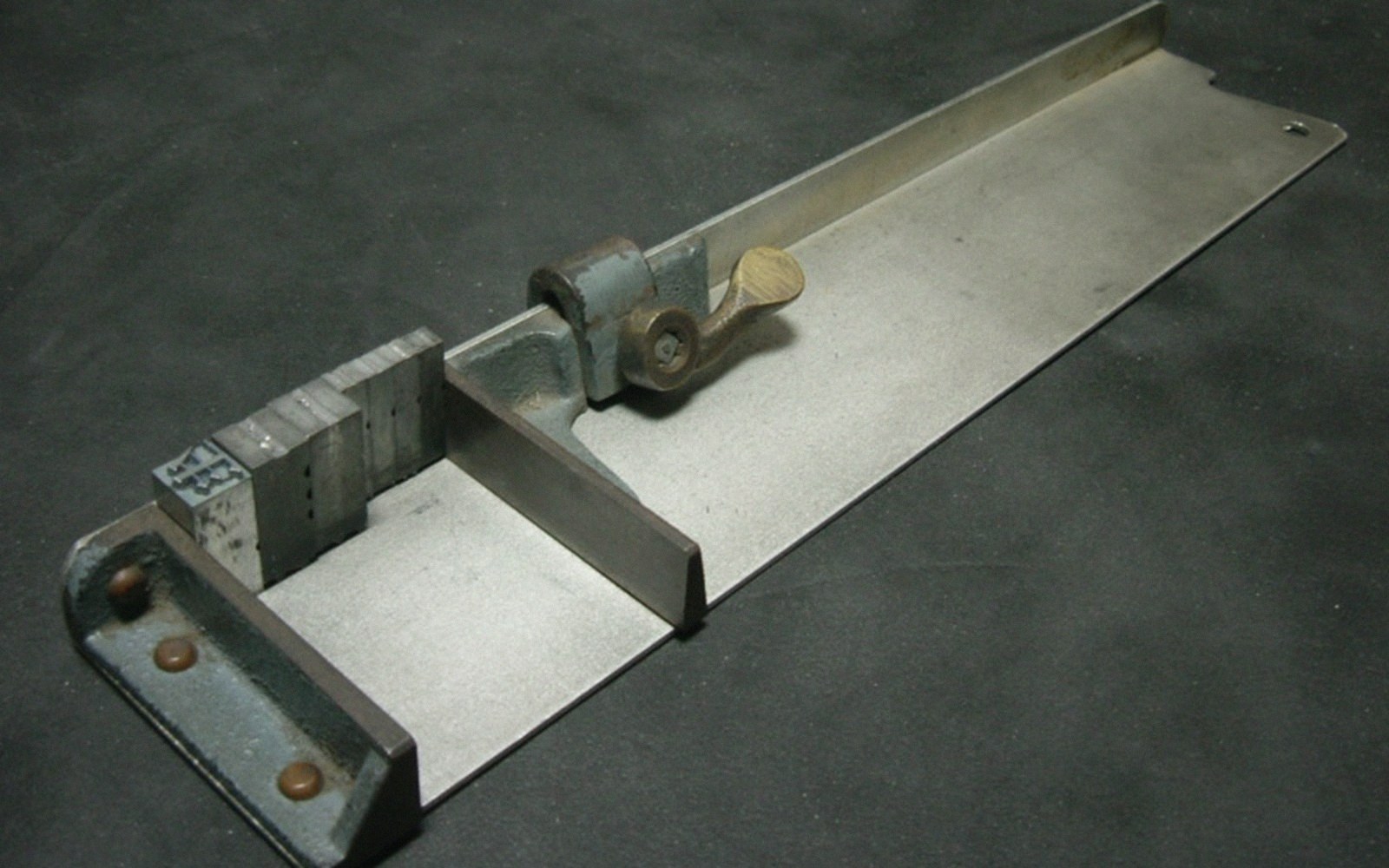
The measure is set before anything else
The composing stick is a small, hinged metal tray, held in the left hand while the right picks type. Before the first letter goes in, the compositor sets the measure — the line length — by sliding the knee, the adjustable end stop, to the correct position and locking it with a thumbscrew. Every line in the job will fill that exact width. Change it mid-run and every previous line becomes wrong.
Type goes in upside down and backwards: the nick, a small groove cast into the foot of each piece, faces up and toward the compositor, which is how you know at a glance that the letter is the right way round before you read it. The thumb holds the growing line steady while the right hand reaches into the case, picks the next sort, and drops it in — face up, nick up, each piece butted flush against the last. A skilled hand does this without looking at the stick, reading the case by position alone.
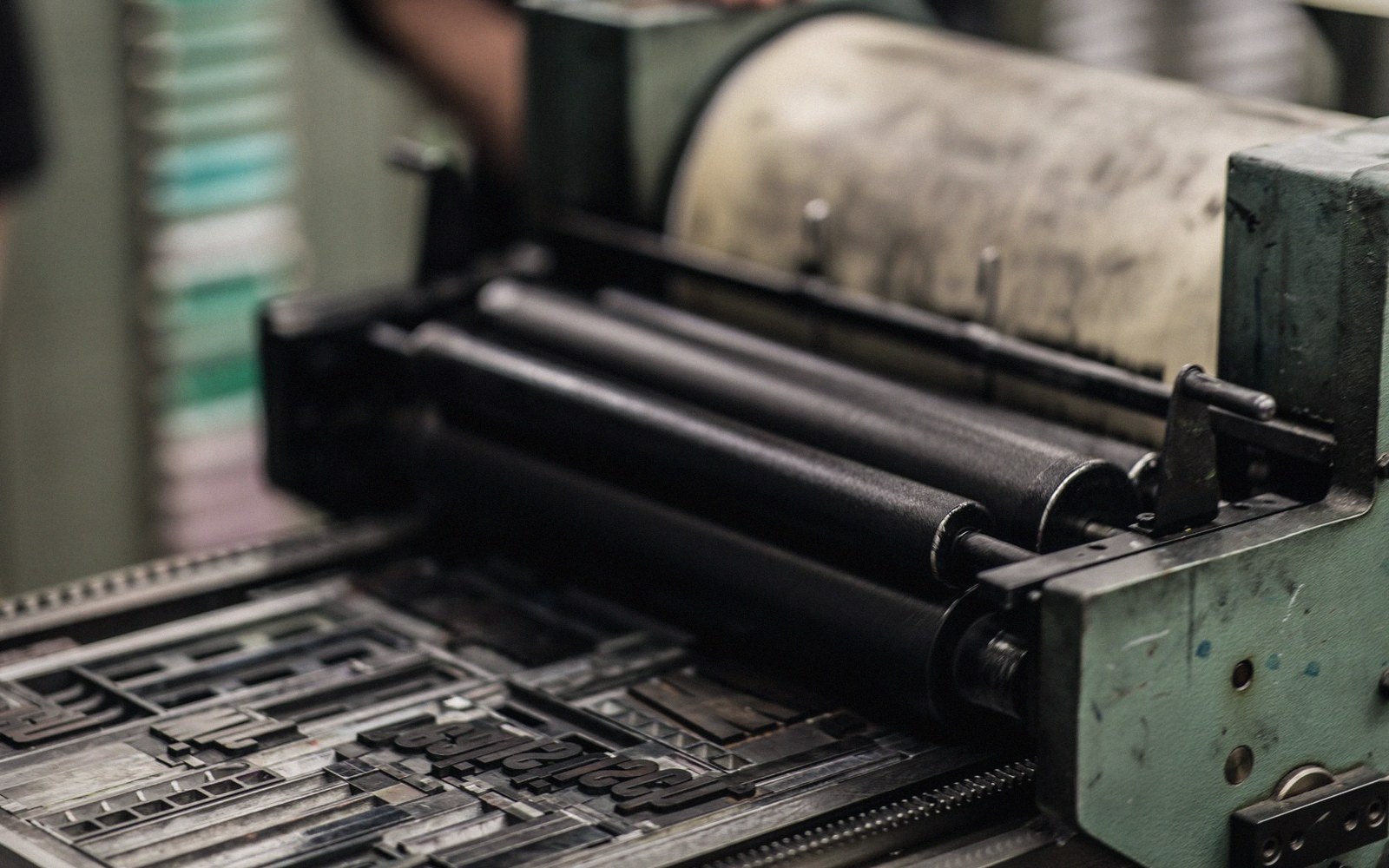
The measure is set before the first letter goes in and cannot be changed once the line is filling.
Photo: Wendelin Jacober / PexelsWhen a line is nearly full, the compositor reaches for spaces — thin metal blanks — and works the fit, adding or removing slivers until the line is tight from wall to wall. That last adjustment, chosen with care, is what keeps the justified column square. Then a thin metal strip, a lead, goes in beneath the line and the next line begins on top of it.
Three lines is a common stick capacity for a small classroom press, though some sticks hold more. When it is full, the compositor slides the composed matter onto a flat tray called a galley, keeping the lines in order and under pressure from the thumb until they are safely transferred. Then the stick comes back to the hand, empty, and the process begins again.
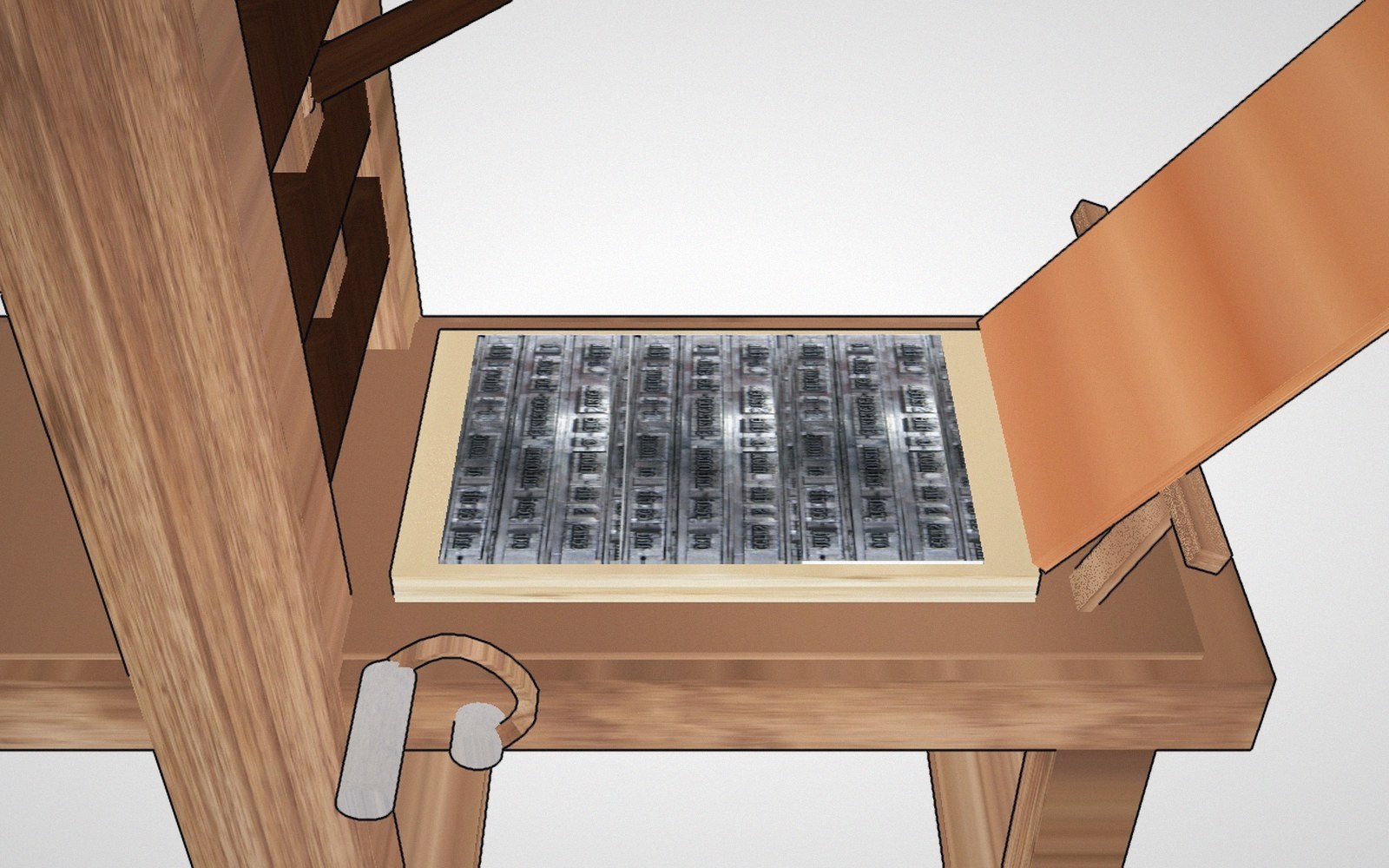
The stick itself requires almost no maintenance. It can outlast every other piece of equipment in the room, which is one reason antique composing sticks still turn up — still functional, still correctly set — decades after the presses they served have gone.