
When the box empties mid-line
Every type case is cast with a count — so many es, so many ts, proportioned to the frequency of their use in ordinary text. The count is generous but not infinite, and a classroom press runs into its limits faster than a commercial shop. One child's piece might exhaust a case's supply of a common letter before the stick is even half full.
The moment it happens is instructive. The compositor reaches for an e, finds the box empty or down to two battered sorts, and has to stop. What happens next reveals something about how the craft actually teaches.
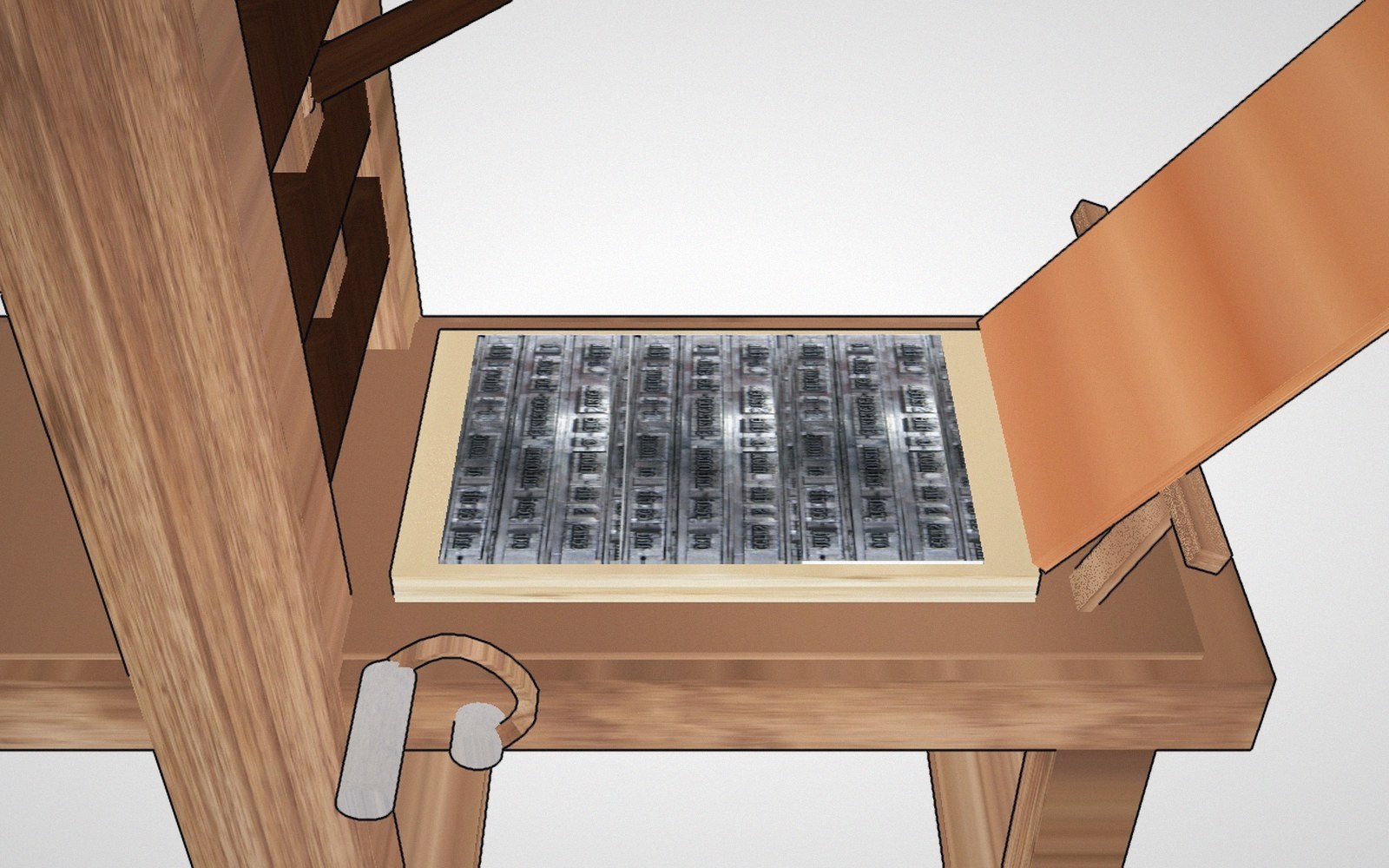
Quoins tightened against the chase: if a single sort lifts under a fingernail, the pull will pick it out.
Photo: The Printing Press. Step 2. Placing the type · Wikimedia CommonsThe first recourse is redistribution. If any earlier lines have been set and are sitting in the galley waiting, those letters are spoken for — they cannot be raided. But if other text is standing loose in the case after a previous run that was never fully distributed, those sorts belong to nobody and can be sorted back in. Putting the type back is unglamorous work at the best of times; the urgency of an empty box makes it suddenly worthwhile.
The second recourse is to look at the text itself. A compositor short on es has every reason to revisit the prose — not to falsify it, but to ask whether a word can be tightened. "The temperature of the water" might become "water temperature"; two es recovered. This is editing under material constraint, and it is arguably more honest than editing under aesthetic preference. The metal enforces the decision.
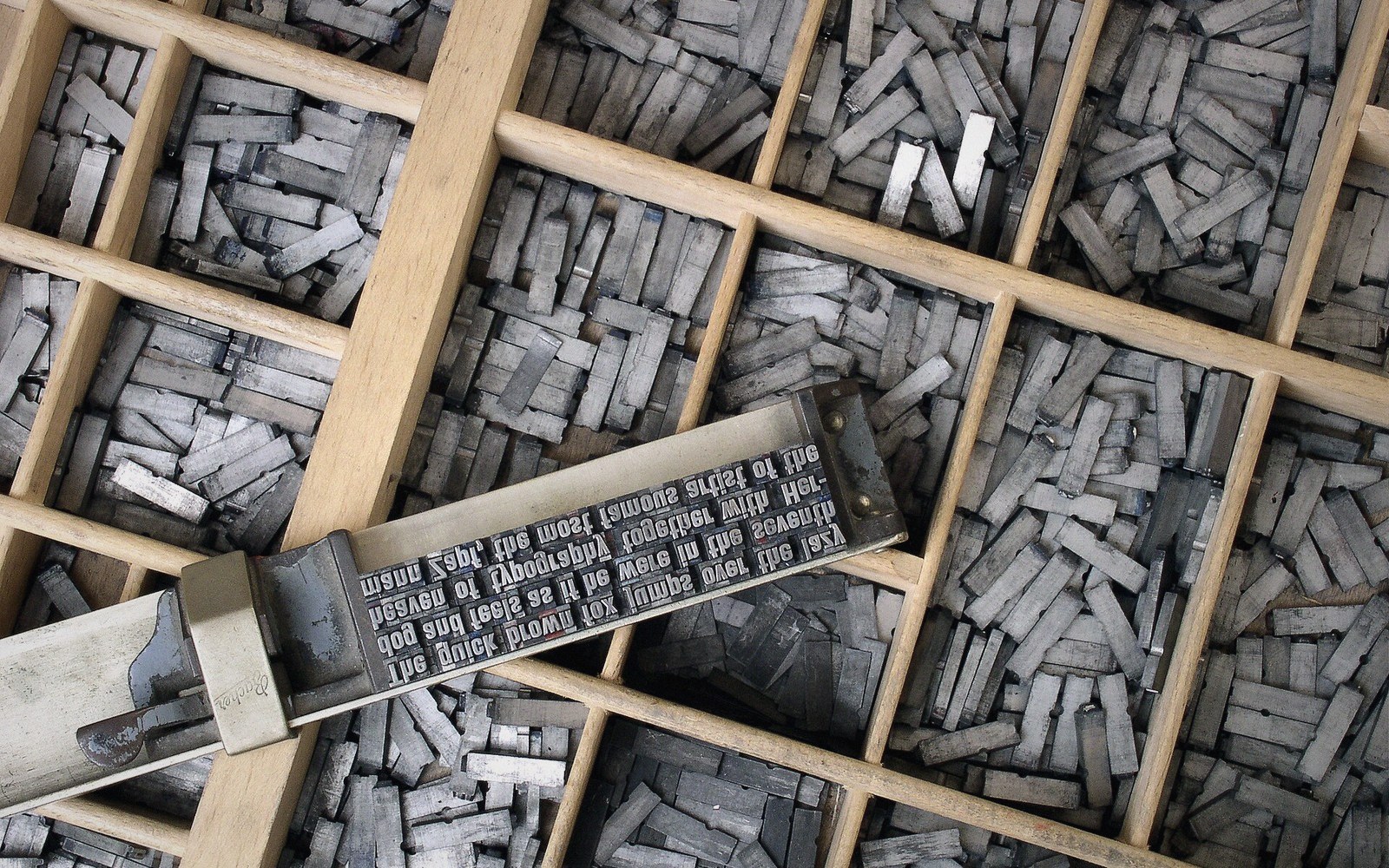
The third option, when neither redistribution nor revision will serve, is to queue the work: finish what can be set, print those lines or that page, distribute the type, and return to the remaining text. A classroom newspaper was rarely set in a single session. Pages were composed in parts across several days, and the case replenished itself naturally as each section cleared the press.
A fourth and rarer solution was to borrow. Schools connected through the correspondence networks sometimes passed sorts between them, or a sympathetic local printer might donate a handful of worn es that were no longer good enough for commercial work but would hold up for one small edition. Such gifts had a texture of their own — slightly different face, perhaps a different depth of nick — and the observant eye could spot them in a finished sheet.
Running out of a letter is not a failure of preparation. It is an encounter with the material reality of type: that each sort is a discrete object, that there are only so many, and that composition is a negotiation between what you want to say and what the case currently holds.