
The other half of the job
Once the forme is off the press and the run is counted, the type is dirty, the ink is tacky, and every piece needs to go back to the case. This is distribution — the return of composed metal to the compartments it came from — and it is, in the arithmetic of classroom printing, roughly equal in time to composition itself.
The word matters. In the trade, distribution means specifically the act of returning type to the case, not the handing out of printed sheets. New compositors confuse the two, and the confusion is worth correcting early, because the discipline of distribution is what makes the next job possible. A case returned carelessly — wrong letters dropped into wrong compartments, pi scattered across the tray — is a case that will misprint for months.

The sequence is straightforward but unforgiving. The forme is unlocked at the press. The type is carried — in the galley, never loose — to the case. Each line is taken in the hand and read backwards, which is how it was set, and the letters are distributed one by one, each dropped by feel and sight into its correct compartment. The compositor reads the line, picks off the letters in order, and returns them. Spaces go back to the space box. Leads go back to the lead drawer. Nothing is rushed.
In a classroom setting, where a forme might contain the work of several children set across multiple sessions, distribution demands an additional quality: patience with type that someone else composed. A line poorly set is still properly distributed. The work of returning it is not a judgment on the work of setting it.
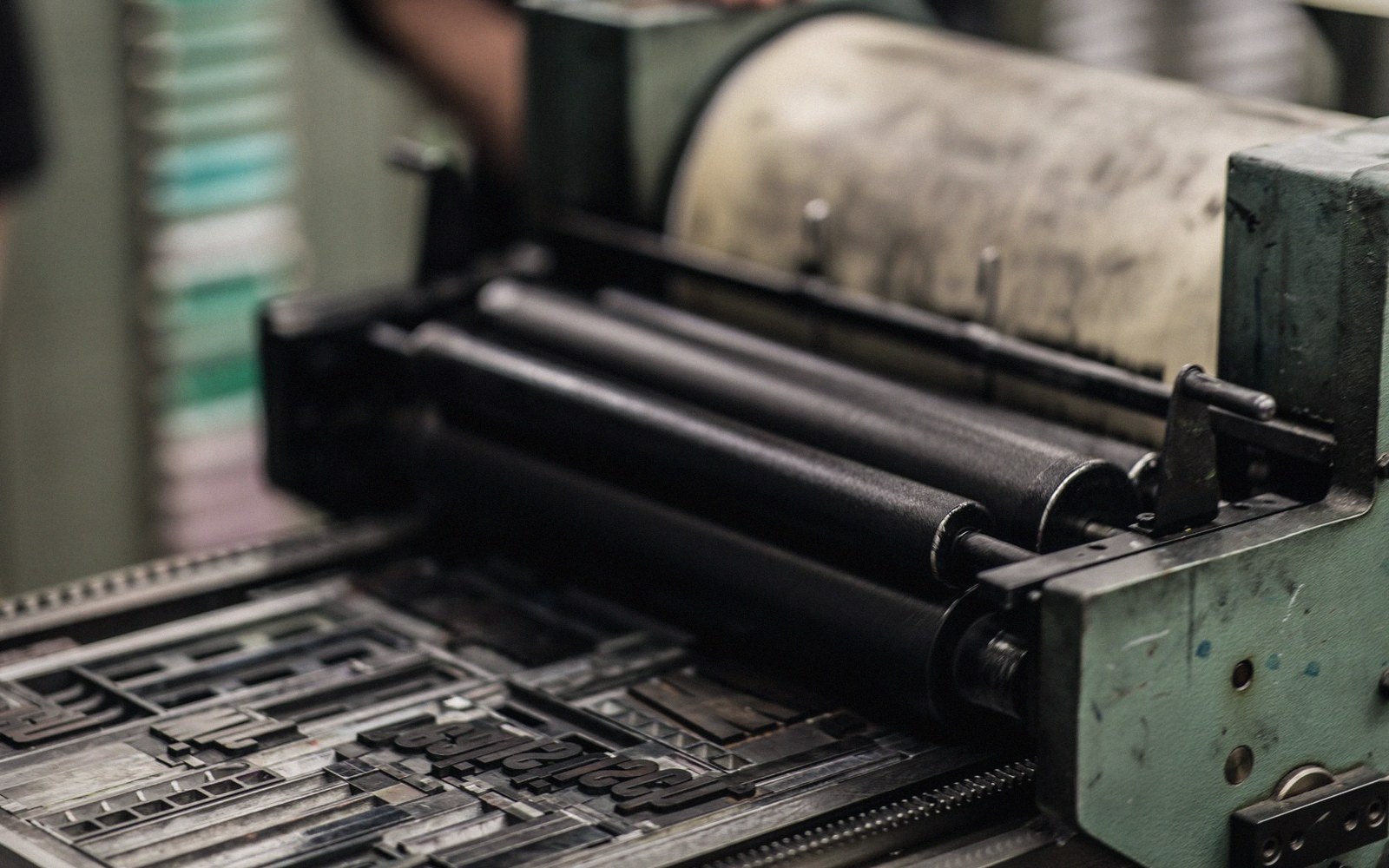
The measure is set before the first letter goes in and cannot be changed once the line is filling.
Photo: Wendelin Jacober / PexelsThe case and its order matter here more than at any other moment in the process. A compositor who half-knows the layout distributes slowly and makes errors. A compositor who knows it by hand — who reaches for the e box without looking — distributes quickly and cleanly. Distribution is, in this sense, a test that composition postpones. You can compose with the case in front of you and look each time. When you distribute, you are returning at speed, and every hesitation is a clue that something was not fully learned.
The discipline has a practical consequence for the classroom: the press cannot be used for a new job until the previous job is distributed. The queue is physical. Type in the galley is type not in the case, and type not in the case is a constraint on the next composition. Distribution is not tidying up. It is resetting the conditions for the next piece of work, and it belongs to the same seriousness as the pull itself.